





Exploring lesser-known permitted development rights for change of use

For over a decade, permitted development rights (PDRs) have been a crucial aspect of the planning system. PDRs have shown to be beneficial in responding to need; for example, regenerating high streets post-Covid and providing a tool for addressing the housing crisis. PDRs allow certain types of building work and changes of use to be carried out without the need for a full planning application. But while many in the development sector are familiar with PDRs for residential extensions or office-to-residential conversions, there are many lesser-known rights that allow change of use – rights which potentially pose significant opportunities to ATs, architects, developers, and investors.
Permitted development rights are granted by a Statutory InstrumentattachedtoTownandCountryPlanninglegislation. The PDRs enable specific changes to be made without the need for planning permission. Part 3 of the General Permitted Development Order (England) (2015) sets out the changes of use that can be permitted. These rights are subject to conditions and limitations (as described below) to mitigate the impact on the surrounding area.
Successive Governments have relaxed rules to allow for a variety of buildings to be converted into homes without requiring planning permission, aiming to boost the supply of homes (particularly in urban areas) and revitalise high streets. The rights most commonly used include the conversion of shops and offices into homes (Class MA) and agricultural barns into homes (ClassQ). But a variety of other rights exist:
- Class M allows the conversion of up to 150sq.m of laundrettes, betting offices, payday loan shops and takeaways to homes.
- Class N allows the conversion of up to 150sq.m of an amusement arcade or casino to homes.
- Classes P and PA allow the conversion of up to 500sq.m of storage or distribution centres and light industrial uses to homes.
- Class L allows the conversion of small houses in multiple occupation (HMOs) to be converted into single homes, and vice versa.
From 2020, partly in response to the Covid crisis and its impact on the high street, the MHCLG created the new Class E category of uses. This combines a wide range of “commercial, business and services” including shops, cafs, restaurants, offices, clinics, health centres, creches, day nurseries, day centres, gyms and most indoor recreations, research and development or light industrial town centre uses.
It has wide ranging potential application, allowing for conversion of an office into a creche, a restaurant into a gym, or a day nursery into a health centre, without the need for planning permission.
One of the more recent PDRs, Class MA, allows buildings that qualify as Class E to be converted into residential use, opening up considerable opportunities for a small industrial unit, health club, or caf to become a home. The media’s interest in some of the less successful office-to-residential conversionsmayhavetakenattentionawayfromsomeof
these other opportunities. Class M and Class N also allow the conversion of buildings for other uses to homes, such as amusement arcades, casinos, laundrettes, betting offices, and takeaways.
Class R allows agricultural buildings to be converted to flexible commercial use and Class S allows for agricultural buildings to be state-funded schools, while Class T allows commercial uses (like hotels) to become state-funded schools and Class U allows converted state-funded schools to be returned to their previous use.
Inevitably there are caveats. Conversions into homes must adhere to national space standards, and the rights do not apply to buildings in use as pubs,theatres and live music venues due to their local community role and cultural significance.
In all cases,legislation states that buildings that lie within an area of ecological/landscape interest or involve a listed building cannot be converted. In most cases, prior approval must be sought from the local authority, which can assess the application in terms of highway impact, contamination, flood risk, design, and provision of adequate natural light in allhabitablerooms.ForClassM,acouncilcanalsoassessthe “desirability” of conversion (however that may be interpreted).
Limited building works are permitted for Class N (amusement arcades or casinos to residential), but it should be noted that other Classes permit a change of use only – planning permission would have to be sought for any external changes. It’s important that advice is sought, as each PDR comes with different restrictions.
Permitted development rights for the conversion of buildings can allow landowners and councils to respond nimbly to changing housing needs in their areas.Repurposing existing buildings is quicker and more sustainable than building new ones and could be a particularly useful tool in bringing life back to high streets and particularly lucrative for ATs. At the same time, careful consideration is necessary to ensure that these conversions provide high-quality housing and maintain the balance of local services. And whilst designed to streamline the process, the legislation remains something of a minefield.

This article appears in the AT Journal issue 152 Winter 2025 as 'Exploring Lesser-Known Permitted Development Rights for Change of Use' John Mason, Associate, Carter Jonas (pictured above).
--CIAT
[edit] Related articles on Designing Buildings
- Alterations to existing buildings.
- Article 4 direction.
- Avoiding planning permission pitfalls.Caravan Sites and Control of Development Act 1960.
- Brownfield Passport.
- Converting commercial offices to residential accommodation.
- Change of use class.
- Class Q permitted development.
- CLC calls for rethink of permitted development rights.
- Conservation area.
- Consultation on proposed reforms to NPPF and other changes to the planning system.
- Detailed planning permission.
- Enforcement notice.
- Established use certificate.
- Golden rules for the release of land.
- Grey belt.
- How long does it take to get planning permission.
- How long does planning permission last.
- IHBC responds to supporting defence infrastructure and the future of time-limited permitted development rights.
- Land use.
- Lawful development certificate.
- Listed building.
- Local development order.
- National Planning Framework.
- National Planning Practice Guidance.
- Neighbourhood development order.
- Neighbourhood planning.
- NPPF consultation briefing notes on terms.
- Outline planning permission.
- Permitted development.
- Permitted development: The end of the high street or a blessing in disguise?
- Planning enforcement.
- Planning permission.
- Prior approval.
- Section 215.
- Sui generis.
- Sui generis and planning permission.
- The grey, the brown and the golden rules of housing.
- Town and Country Planning Act.
- Town and Country Planning (General Permitted Development) (Amendment) (England) Order..
- Use class designation for land and buildings.
Featured articles
Check out some of the best features and news from Designing Buildings as well as key stories from around the web.

CIOB celebrates positive Ofsted report.

The Building Safety Regulator announces a call for evidence.

Government approach could undermine delivery and regeneration.
World's first mass timber data centre.

The overlooked environmental aspect of data centre development.
Introduction to radon awareness

New technical information sheet published by CIOB.

Updated supplier guide can help electrical contractors engage with NHP.

CIAT confirm the winners of the 2026 architectural technology awards.
Government launches a one stop shop for flood preparedness.
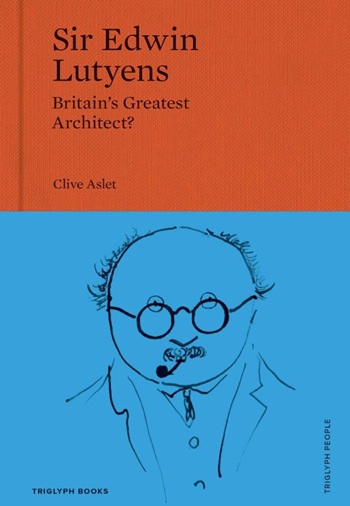
Sir Edwin Lutyens: Britain's greatest architect? Book review.
CIOB publishes free template to help assess and manage risks.
ECA's reflections on Party Conference season

Burnham wants to be confident of winning before asking for a fresh mandate.
New Chief Construction and Scientific Adviser

Sergio Cavalaro, Professor of Infrastructure Systems at Loughborough University.